

Used automotive vehicle retailer Carmax (NYSE:KMX) reported revenue ahead of Wall Street’s expectations in calendar Q3 2026 (fiscal Q2 2027), with sales up 19.5% year on year to $7.88 billion. Its GAAP profit of $1.16 per share was 59.7% above analysts’ consensus estimates.
Is now the time to buy CarMax? Find out by accessing our full research report, it’s free.
CarMax (KMX) Q3 CY2026 Highlights:
- Revenue: $7.88 billion vs analyst estimates of $6.95 billion (19.5% year-on-year growth, 13.4% beat)
- EPS (GAAP): $1.16 vs analyst estimates of $0.73 (59.7% beat)
- Operating Margin: 2.2%, in line with the same quarter last year
- Free Cash Flow Margin: 10.2%, similar to the same quarter last year
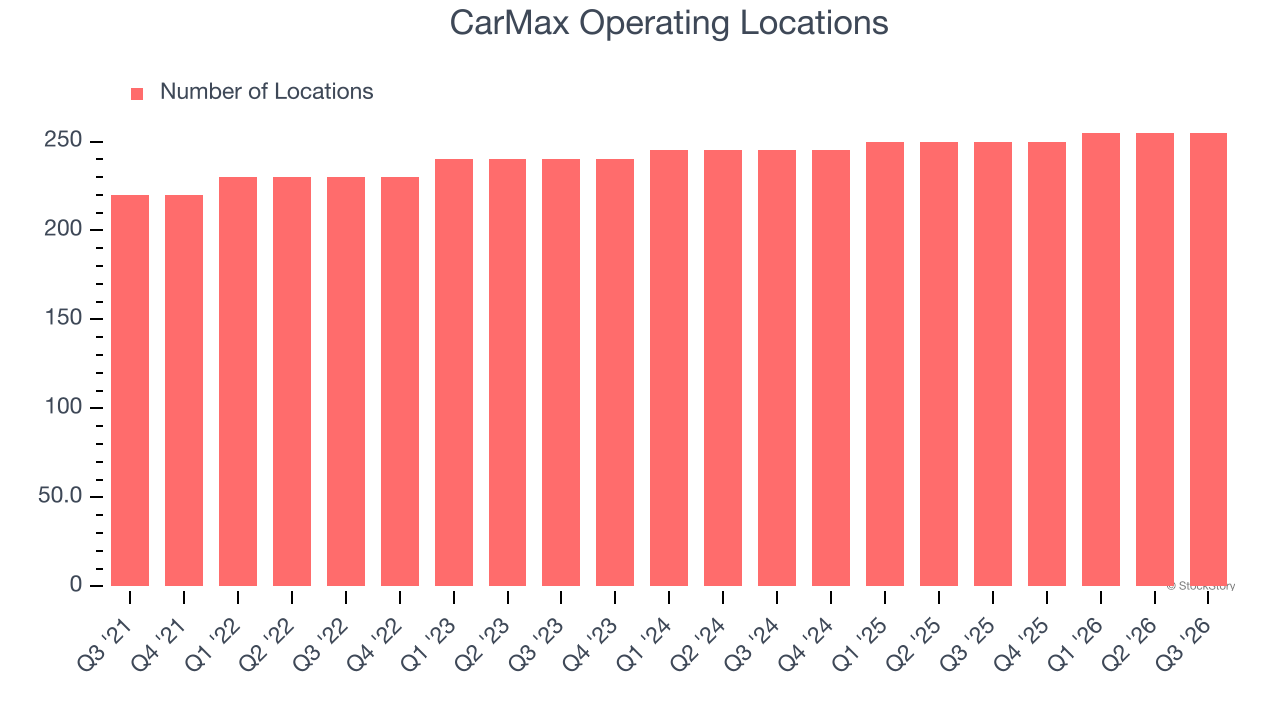
- Locations: 255 at quarter end, up from 250 in the same quarter last year
- Same-Store Sales rose 18.9% year on year (-7.1% in the same quarter last year)
- Market Capitalization: $8.03 billion
“Our strong second quarter results reflect solid execution and early progress against Shift into GEAR, our four-pillar strategy to strengthen CarMax’s core business and return the company to sustained growth,” said Keith Barr, President and Chief Executive Officer. “We delivered 81% EPS growth as we strengthened our price competitiveness, increased Extended Protection Plan margins, expanded CAF’s share of Tier 2 originations, continued to enhance our digital experience, and drove material SG&A leverage. I am confident in our ability to build on this early momentum. We have a clear strategy, a solid foundation, and an exceptional team accelerating our progress to create long-term value for our shareholders.”
Company Overview
Known for its transparent, customer-centric approach and wide selection of vehicles, Carmax (NYSE:KMX) is the largest automotive retailer in the United States.
Revenue Growth
Reviewing a company’s long-term sales performance reveals insights into its quality. Any business can experience short-term success, but top-performing ones enjoy sustained growth for years.
With $27.63 billion in revenue over the past 12 months, CarMax is one of the larger companies in the consumer retail industry and benefits from a well-known brand that influences purchasing decisions. However, its scale is a double-edged sword because there is only so much real estate to build new stores, placing a ceiling on its growth. To accelerate sales, CarMax likely needs to optimize its pricing or lean into international expansion.
As you can see below, CarMax struggled to increase demand as its $27.63 billion of sales for the trailing 12 months was close to its revenue three years ago. This was surprising given it opened new stores to expand its reach.
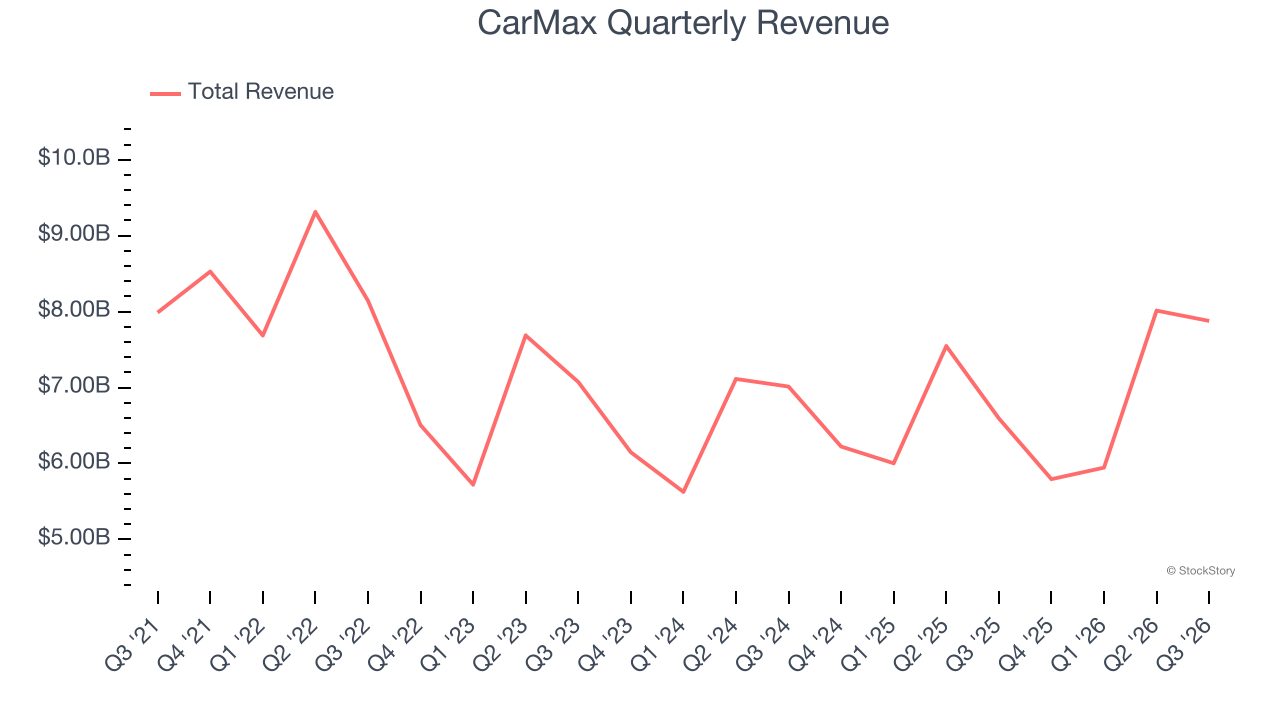
This quarter, CarMax reported year-on-year revenue growth of 19.5%, and its $7.88 billion of revenue exceeded Wall Street’s estimates by 13.4%.
Looking ahead, sell-side analysts expect revenue to remain flat over the next 12 months. This projection is underwhelming and suggests its products will see some demand headwinds.
ONE MORE THING: The $21 AI Application Stock Wall Street Forgot. While Wall Street obsesses over who’s building AI, one company is already using it to print money. And nobody’s paying attention.
AI chip stocks trade at ridiculous valuations. This company processes a trillion consumer signals monthly using AI and trades at a third of the price. The gap won’t last. The institutions will figure it out. You need to see this first. Read the FREE Report Before They Notice.
Store Performance
Number of Stores
A retailer’s store count often determines how much revenue it can generate.
CarMax operated 255 locations in the latest quarter. It has generally opened new stores over the last two years and averaged 2% annual growth, faster than the broader consumer retail sector.
When a retailer opens new stores, it usually means it’s investing for growth because demand is greater than supply, especially in areas where consumers may not have a store within reasonable driving distance.
Same-Store Sales
The change in a company’s store base only tells one side of the story. The other is the performance of its existing locations and e-commerce sales, which informs management teams whether they should expand or downsize their physical footprints. Same-store sales provides a deeper understanding of this issue because it measures organic growth at brick-and-mortar shops for at least a year.
CarMax’s demand rose over the last two years and slightly outpaced the industry. On average, the company’s same-store sales have grown by 2.3% per year. This performance suggests its measured rollout of new stores could be beneficial for shareholders. When a retailer has demand, more locations should help it reach more customers and boost revenue growth.
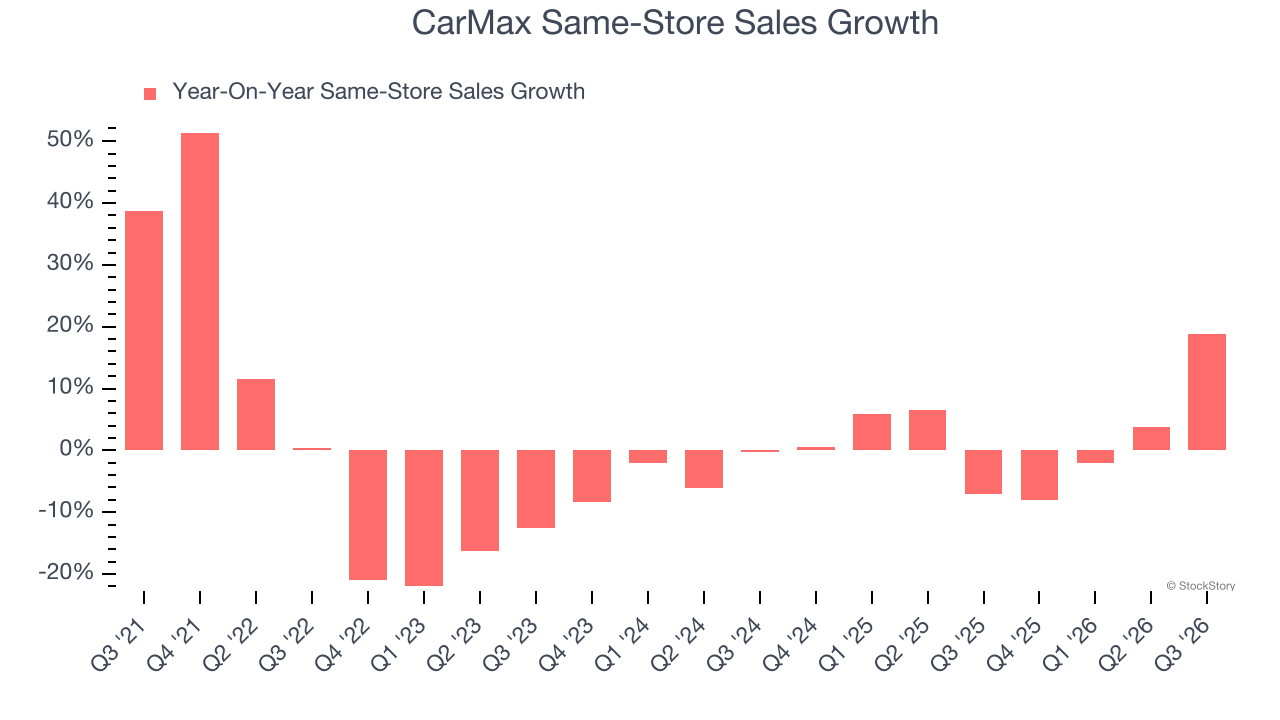
In the latest quarter, CarMax’s same-store sales rose 18.9% year on year. This growth was an acceleration from its historical levels, which is always an encouraging sign.
Key Takeaways from CarMax’s Q3 Results
It was good to see CarMax beat analysts’ EPS expectations this quarter. We were also excited its revenue outperformed Wall Street’s estimates by a wide margin. On the other hand, its gross margin slightly missed. Zooming out, we think this quarter featured some important positives. The stock remained flat at $58.13 immediately following the results.
CarMax put up rock-solid earnings, but one quarter doesn’t necessarily make the stock a buy. Let’s see if this is a good investment. If you’re making that decision, you should consider the bigger picture of valuation, business qualities, as well as the latest earnings. We cover that in our actionable full research report which you can read here (it’s free).