
What Is Resveratrol?
Resveratrol is a natural polyphenolic phytoalexin—a compound produced by plants to protect themselves from stress, fungal diseases, and UV radiation. It is most commonly found in grapes, peanuts, Japanese knotweed, blueberries, and mulberries. Chemically, it is known as 3,5,4′-trihydroxy-trans-stilbene, with a chemical formula of C14H12O3.
For decades, resveratrol was primarily studied for its potential health benefits in cardiovascular health and longevity. However, in recent years, its effects on skin health have become a major focus of scientific research, thanks to its powerful antioxidant and anti-inflammatory properties. Unlike some synthetic anti-aging ingredients, resveratrol is natural, making it a popular choice for consumers seeking gentle yet effective skincare solutions.
The Science of Skin Aging: Why Resveratrol Matters
Intrinsic aging happens as we get older, with our skin producing less collagen and elastin—the proteins that keep skin firm and elastic. Extrinsic aging, on the other hand, is driven by reactive oxygen species, also known as free radicals, which damage skin cells, break down collagen, and lead to fine lines, wrinkles, dark spots, and sagging skin. Chronic low-grade inflammation, often called “inflammaging,” also plays a key role in accelerating skin aging by disrupting normal cellular function.
Resveratrol targets both intrinsic and extrinsic aging by acting on multiple molecular pathways. Its primary mechanisms of action include activating sirtuin 1 (SIRT1), suppressing the NF-κB pathway, promoting AMP-activated protein kinase (AMPK) phosphorylation, and neutralizing free radicals—all of which work together to protect skin cells, boost collagen production, and reduce inflammation.
Key Research: Can Resveratrol Reverse Skin Aging Signs?
- Clinical Trial: Trans-Resveratrol Reduces Wrinkles in Adult Females
A 2024 double-blind, randomized, placebo-controlled clinical study published in the Journal of Fragrance and Cosmetic Science tested the effects of trans-resveratrol on 134 healthy females aged 40 and older. Participants were divided into four groups: one group took oral resveratrol and applied a topical resveratrol cream, while other groups used either oral, topical, or placebo products for 8 weeks.
The results showed that the group using both oral and topical resveratrol had significantly reduced wrinkle scores compared to the placebo group. Additionally, all treatment groups had increased sebum levels, which helps keep skin hydrated and supple. The study concluded that oral and topical resveratrol combined is effective at reducing wrinkles, while topical resveratrol alone increases sebum production—both key benefits for aging skin. Importantly, the study found no serious adverse effects, confirming resveratrol’s safety for topical and oral use.
- Preclinical Study: Resveratrol Protects Against UVA-Induced Photoaging
UV radiation, especially UVA, is one of the biggest causes of extrinsic skin aging. A 2023 study published in PubMed investigated resveratrol’s ability to protect against UVA-induced photoaging in human skin fibroblasts (HSF) and male mice. The researchers exposed HSF cells and mice to UVA radiation and then treated them with resveratrol.
The results demonstrated that resveratrol promoted AMPK phosphorylation to activate autophagy, reduced ROS production, inhibited cell apoptosis, and restored normal cell cycle function. In mice, subcutaneous injection of resveratrol improved skin roughness, erythema, and wrinkles, reduced epidermal hyperkeratosis and hyperpigmentation, and inhibited collagen fiber degradation. The study concluded that resveratrol can effectively treat UVA-induced photoaging by regulating the AMPK pathway, providing a new therapeutic strategy for anti-aging skincare.
Resveratrol in Cosmetics: Product Features and Advantages
- Natural and Gentle, Suitable for All Skin Types
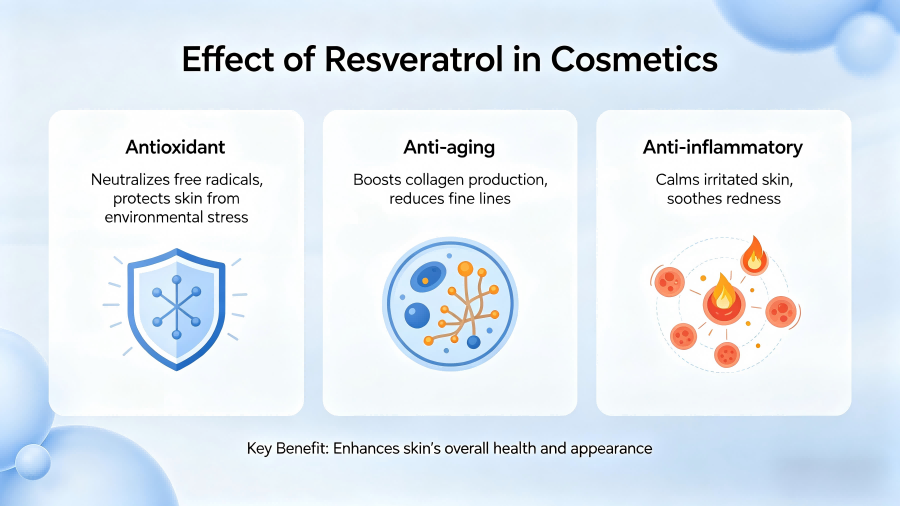
Resveratrol is a natural ingredient derived from plants, making it gentler than many synthetic anti-aging ingredients (like high-concentration retinol). It is non-toxic, non-comedogenic (does not clog pores), and has minimal side effects—only mild irritation in rare cases. This makes it suitable for all skin types, including sensitive skin, oily skin, and dry skin. For sensitive skin, resveratrol’s anti-inflammatory properties can even help reduce redness and irritation.
- Multi-Purpose Anti-Aging Benefits
Unlike ingredients that target only one sign of aging, resveratrol offers multiple benefits: it neutralizes free radicals (antioxidant), reduces inflammation (anti-inflammatory), boosts collagen production, inhibits collagen breakdown, improves skin elasticity, fades dark spots, and increases skin hydration. This multi-action approach makes it a versatile ingredient that addresses multiple aging concerns at once, from fine lines and wrinkles to dullness and uneven skin tone.
- Synergistic with Other Skincare Ingredients
Resveratrol works well with other popular skincare ingredients, enhancing their efficacy. Common synergistic pairings include: ferulic acid, vitamin C, hyaluronic acid, and quercetin. This versatility allows brands to create powerful, multi-ingredient formulations that deliver better results than resveratrol alone.
Applications of Resveratrol in the Cosmetics Industry
- Anti-Aging Serums
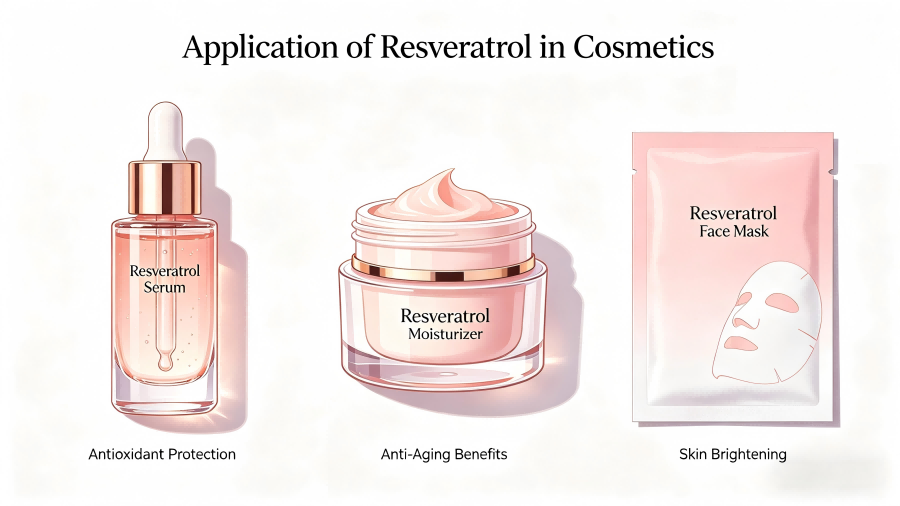
Serums are the most common application of resveratrol in skincare. Due to their lightweight, fast-absorbing formula, serums allow resveratrol to penetrate deep into the skin, where it can target collagen production and free radical damage. Most resveratrol serums contain a concentration of 0.5% to 2% trans-resveratrol, often combined with other antioxidants (like vitamin C) or hyaluronic acid for added benefits. These serums are designed to reduce fine lines, improve skin firmness, and brighten the complexion with regular use.
- Night Creams and Recovery Products
Night creams are another popular application for resveratrol. During sleep, the skin undergoes repair and regeneration, making it the perfect time to deliver resveratrol’s anti-aging benefits. Resveratrol night creams often have a richer texture than serums, providing hydration while supporting skin repair. They may also include ingredients like retinol or peptides to enhance anti-aging results. Additionally, resveratrol is used in overnight masks and recovery treatments to soothe and repair skin damaged by UV radiation or pollution.
- Eye Care Products
The skin around the eyes is thin and delicate, making it prone to early signs of aging, such as fine lines, crow’s feet, and dark circles. Resveratrol is often included in eye creams and eye serums to target these concerns. Its antioxidant and anti-inflammatory properties help reduce puffiness, fade dark circles, and smooth fine lines around the eyes. Eye products with resveratrol are typically gentle, non-irritating, and designed to be used twice daily.
- Body Care Products
Resveratrol is not just for the face—it is also used in body lotions, body creams, and body serums to address aging signs on the body, such as sagging skin, stretch marks, and uneven skin tone. For example, grapevine extracts containing resveratrol are used in body care products to firm the skin, improve suppleness, and even provide a slimming effect by activating SIRT1 and inhibiting PDE-4. These products are particularly popular for targeting areas like the thighs, abdomen, and arms, where skin can become loose with age.
- Sunscreens and Anti-Pollution Products
While resveratrol is not a substitute for sunscreen, it is often added to sunscreen formulations to enhance their protective effects. Its antioxidant properties help neutralize free radicals caused by UV radiation, reducing the damage that leads to photoaging. Resveratrol is also used in anti-pollution products, as it helps protect the skin from harmful pollutants that contribute to oxidative stress and premature aging. These products often combine resveratrol with other antioxidants to create a “shield” against environmental damage.
Contact us
Conclusion: Does Resveratrol Really Reverse Skin Aging Signs?
Based on the scientific research and real-world applications, the answer is clear: resveratrol cannot “reverse” skin aging in the literal sense—once collagen is lost or wrinkles are deeply formed, no ingredient can completely erase them. However, resveratrol can significantly reduce the visible signs of aging, slow down the aging process, and even repair some existing damage.
For consumers looking for a natural, effective anti-aging ingredient, resveratrol is an excellent choice. Its multi-purpose benefits, gentle nature, and scientific backing make it a standout in the cosmetics industry. For brands, resveratrol offers a cost-effective, globally compliant ingredient that appeals to consumers seeking natural, results-driven skincare.
Media Contact
Company Name: Xi'an Aoge Biotech Co., Ltd.
Email: Send Email
Country: China
Website: https://www.aogebio.com/