
Louisiana native Ben Landry of Ocean Harvesters tells listeners buffer plan can protect jobs, reduce conflict, and keep Louisiana a Sportsman's Paradise
BATON ROUGE, LA / ACCESS Newswire / December 4, 2025 / Ocean Harvesters' Ben Landry joined host Brian Haldane yesterday morning, December 3, 2025, on Talk 107.3 WBRP-FM to discuss Louisiana's long-standing menhaden (pogie) fishery and proposed changes to nearshore buffer zones that govern how close industry vessels can operate to the coast.
The Louisiana Wildlife and Fisheries Commission recently advanced a Notice of Intent (NOI) that would reduce the standard buffer zone from one-half mile to one-quarter mile. At the same time, additional protections around sensitive areas of the Chandeleur Sound and nearby islands would increase the overall number of square miles off-limits to the menhaden fleet by roughly four percent.
"This fishery has operated in Louisiana for 70-plus years," Landry told listeners. "And from the 1950s through 2021, there was no buffer in place. So, when you hear the term Sportsman's Paradise, that state moniker was given during an era where there were no menhaden regulations of any real substance."
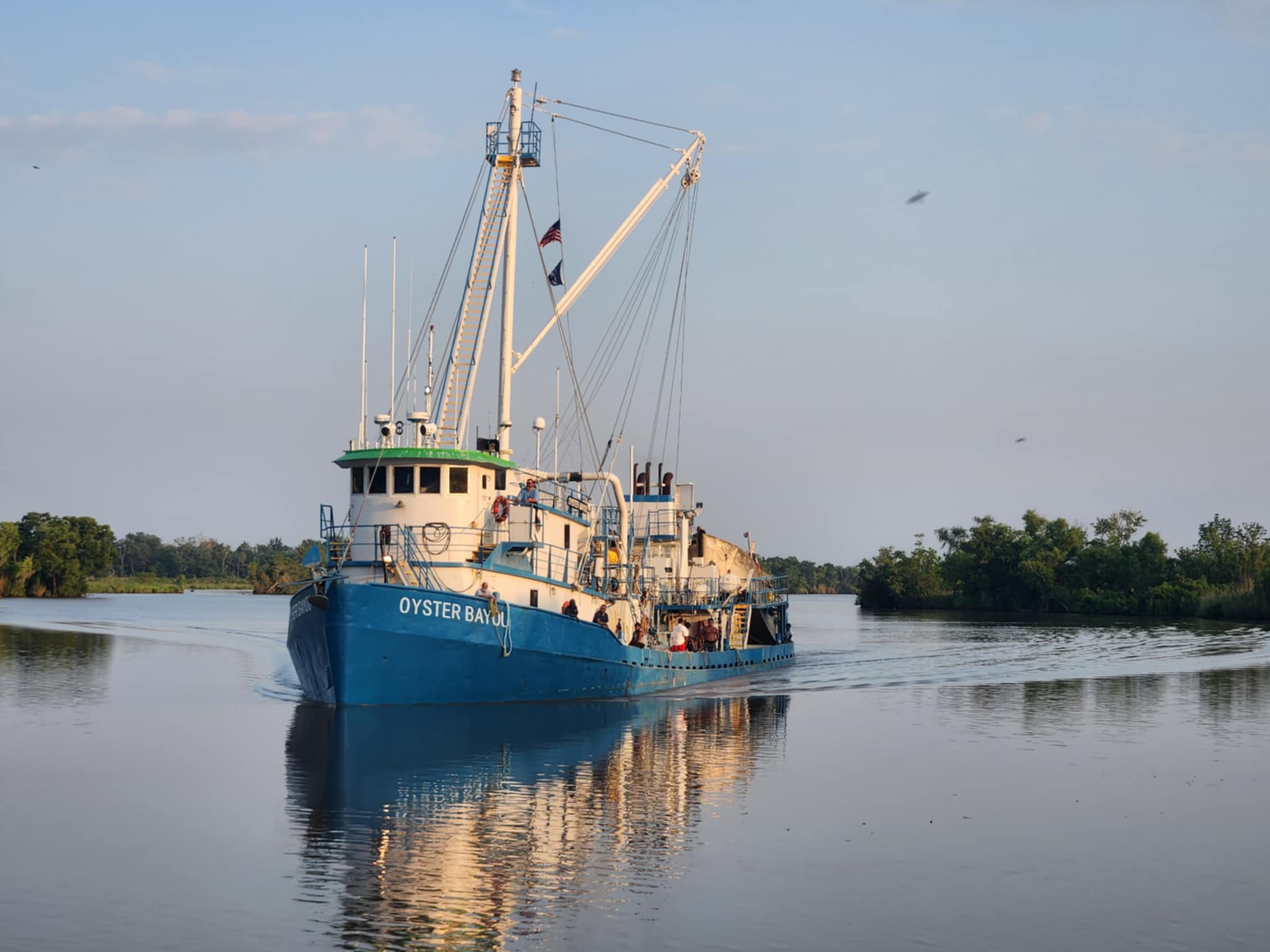
Menhaden are a nearshore schooling species and pushing fishing vessels farther offshore has had real economic consequences. Since the half-mile buffer was implemented, the industry has seen catch reductions in the range of 10 to 15 percent in Louisiana. Landry said allowing a quarter-mile buffer in designated areas is critical to offset those losses while maintaining protections in sensitive or heavily used recreational zones.
"I hear it from my captains all the time that they see these schools of menhaden and they're not crossing that half-mile line," Landry said. "They're inside of that."
The Gulf menhaden population is strong, with tens of billions of fish in the water and harvest levels well within sustainable limits. Landry also addressed concerns about bycatch of prized sportfish such as red drum in menhaden nets. Citing recent scientific work, he noted that the menhaden fishery accounts for just 3.4 percent of all red drum mortality and about 2.7 percent of speckled trout mortality in Louisiana, with the overwhelming majority of both species' mortality coming from rod-and-reel fishing.
Landry also discussed recent research from the University of Southern Mississippi showing that no single predator in the Gulf depends exclusively on menhaden. The Gulf's prey base is highly dynamic, and predators such as red drum, mackerel, and speckled trout have access to a wide variety of forage, from shrimp to other small fish and larvae. "We're not seeing species that are food deprived in the Gulf," he said.
Beyond science, Landry reminded listeners and policymakers that the menhaden fishery is a major employer and economic engine in coastal communities that often have few alternatives. Across the Gulf, the fishery directly supports 800 plus jobs, including fishermen and plant workers, and indirectly supports about 2,000 jobs when suppliers, transportation, and related services are included. The total economic impact is estimated at $419 million, with much of that activity concentrated in working waterfronts and economically stressed parishes.
Menhaden harvested by Ocean Harvesters are processed into high-protein meal and fish oil used in pet food, aquaculture feeds-particularly for salmon, some livestock feeds, and human nutrition products such as omega-3 supplements. Landry noted that this makes Louisiana's menhaden fishery part of a global food system that reaches far beyond the Gulf.
At the same time, he said, the industry recognizes the importance of Louisiana's charter businesses and the state's 407,000 licensed recreational anglers.
"Recreational anglers are an important industry in this state, nobody's debating that," Landry said. "What we're trying to do is share those nearshore waters where both their targeted fish and our targeted fish are."
Landry also expressed the importance of cooperation: "All fishermen out there, including our captains, should understand what a little bit of grace might lead to. We're not battling out there. If they're a charter fisherman, they're trying to make sure the folks that chartered their vessel have a good time. And our captains are trying to catch some fish that keep their livelihood going. So, I think everybody, if they took a beat, would realize that we can all exist in the same fishing ground."

About the Menhaden Fisheries Coalition
The Menhaden Fisheries Coalition (MFC) is a collective of menhaden fishermen, related businesses, and supporting industries. Comprised of businesses along the Atlantic and Gulf coasts, the Menhaden Fisheries Coalition conducts media and public outreach on behalf of the menhaden industry to ensure that members of the public, media, and government are informed of important issues, events, and facts about the fishery.
Press Contact
Menhaden Fisheries Coalition
(202) 595-1212
www.menhaden.org
SOURCE: Menhaden Fisheries Coalition
View the original press release on ACCESS Newswire